 Horse racing might look like the same sport on both sides of the Atlantic, but the moment the gates open, the differences become obvious. In the United Kingdom, it’s a test of endurance, strategy, and handling unpredictable turf. In the United States, it’s all about speed, precision, and tight track turns.
These contrasting setups shape how the sport is played and how bets are made. Each system has its rhythm and for bettors, knowing those rhythms is where profit begins. Let’s look at what sets them apart and how those details open new angles for smart wagering.
Track Surfaces and Racing Styles
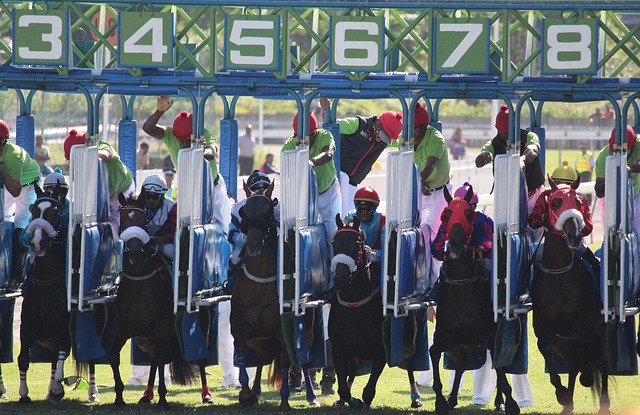
One of the biggest contrasts lies in the ground itself. In the US, racing is far more standardised. Most tracks are dirt or synthetic ovals with consistent surfaces and shorter straights. Pace and early position dominate because speed sets the tone from the break. That’s why data-driven bettors track split times and post positions, while UK punters rely more on course shape, ground reports, and jockey judgment.
In the UK, most races are run on turf across natural, undulating courses that test balance and stamina. For those exploring horse betting online, live odds and market updates respond quickly to going changes, non-runner news, and track quirks. No two courses are identical, with left- and right-hand turns, uneven gradients, and weather-driven surfaces that shift through the day. That unpredictability means form study needs more than a glance at past results. It demands knowing how each runner handles specific conditions and course profiles.
Race Formats and Distances
British racing thrives on variety. It offers flat racing and National Hunt (jump) racing, each with distinct strategies and seasonal rhythms. Flat races can range from sharp five-furlong sprints to stamina-draining two-mile contests, while jumps test endurance, technique, and nerve. The same horse might face drastically different challenges week to week, which keeps form fluid and betting lines dynamic. Knowing how trainers campaign their horses across classes and distances is crucial in spotting overlays in the market.
In contrast, American racing heavily favours short to middle-distance events, typically between six furlongs and a mile and an eighth. The limited range creates a narrower form spectrum, making raw speed and positional bias more predictive.
Many bettors build models around pace projections and sectional timing rather than course adaptability. However, that narrower spread also means the few long-distance races, like those on turf or in graded stakes, often offer softer odds when stamina types cross over from Europe. Recognising those mismatch moments can be a profitable angle for experienced punters.
Betting Structure and Market Depth
The two countries also differ sharply in how money flows through their betting systems. In the UK, fixed-odds betting dominates. Punters lock in prices with bookmakers before the race starts, giving them control over timing and perceived value. If odds shorten after placing a bet, the early backer benefits. This encourages tactical plays like spotting value drifts or backing early movers before the market reacts. Exchange betting has also added a peer-to-peer dimension, where punters can back and lay selections directly against each other.
Across the Atlantic, pari-mutuel wagering rules the scene. All bets of the same type go into a shared pool, and payouts are determined after the race based on how much money sits in each outcome. There’s no fixed price, just a moving target shaped by the betting public.
For those skilled in pattern recognition, watching how pools evolve close to post time reveals crowd sentiment and mispriced entries. Sharp bettors use that volatility to their advantage, backing overlooked contenders in the final minutes before the window closes. Understanding those liquidity swings is essential for consistent returns in US racing.
Jockey Tactics and Training Approaches
The way horses are ridden and trained reflects each nation’s conditions. In the UK, races often develop slowly before building into sustained, tactical finishes. Jockeys must judge pace across longer stretches, knowing when to hold and when to push. Training emphasises stamina, adaptability, and recovery, since horses frequently compete at varying distances and courses throughout a season. That’s why trainer patterns, such as targeting specific meets or track types, often signal intent before markets adjust.
In the US, the approach leans heavily on explosive starts and steady cruising speeds. Trainers condition horses for quick acceleration and front-running efficiency, and jockeys ride to preserve position more than to craft late surges. Split-second decisions at the gate can decide everything. Bettors studying trip notes and post-position biases gain an edge because the early break is such a decisive factor. Spotting a horse with both tactical speed and a favourable draw can reveal where the true overlay lies, even in short fields.
Seeing the Game Beyond Borders
Viewed side by side, American and British racing mirror two schools of thought. One relies on control, tempo, and fixed systems. The other thrives on adjustment, endurance, and variation. The same difference applies to how money moves in their markets. Each demands a separate betting discipline, but the real advantage belongs to those who bridge them. Seeing how odds shift, how conditions alter pace, and how trainers adapt gives bettors the kind of clarity that keeps long-term profit realistic.
 In British racing, the silverware often tells you as much about the yards as the horses. Another season, another reshuffle. Bookmakers lean toward Willie Mullins after yet more festival plunder, while a determined British chase pack tries to chip away at the gap.
 Success on the racecourse rarely comes down to talent alone. Behind every winning horse is a routine built on preparation, patience, and smart decisions. While training methods have evolved over time, there’s still plenty to learn by looking beyond the stables. Top-level athletes in other sports often set the standards when it comes to mindset, discipline, and physical conditioning. Their habits, recovery techniques, and mental focus all offer ideas that can be adapted for the world of horse training.
 Jockeys are more than just athletes riding at high speeds. Every time they step into the saddle, they carry hours of preparation, observation, and strategy with them. Analysing a race and understanding opponents is as much a part of the job as physical fitness and riding skill. This behind-the-scenes work often makes the difference between finishing in the pack or crossing the line first.