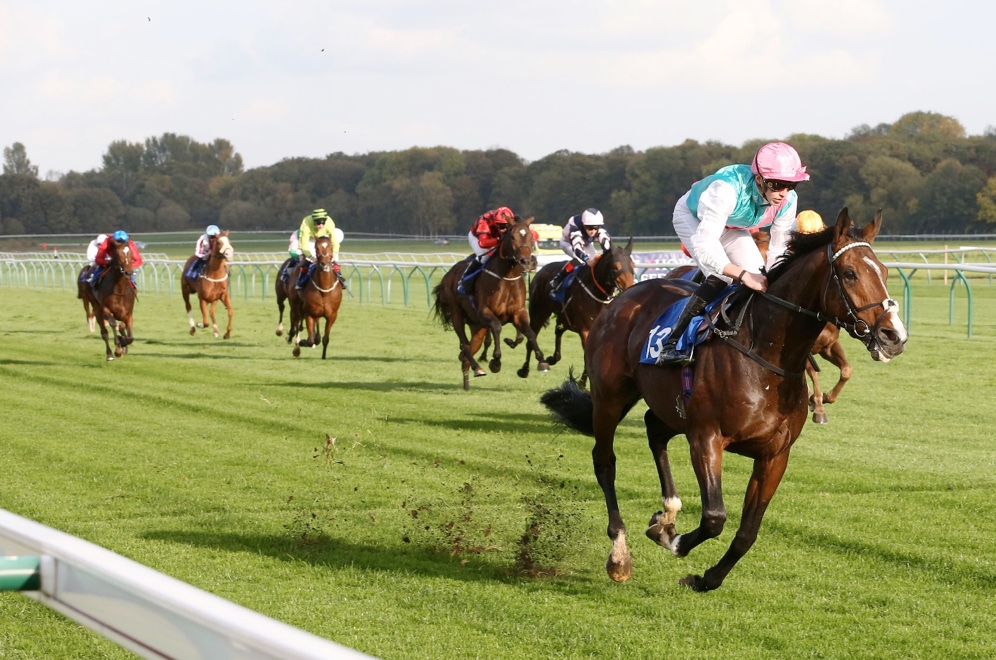
Did Toby Balding ever win the November Handicap?

The late Gerald Barnard Balding Jr., known as ‘Toby’ since childhood, became the youngest trainer in Britain when, aged 20, he inherited the licence at Fyfield House in Weyhill, Hampshire following the untimely death of his father, Gerald Barnard Balding Sr., on September 16, 1957. Toby Balding was always a ‘dual purpose’ trainer, but is probably best remembered for his exploits in the sphere of National Hunt racing. Indeed, he had the rare distinction winning the Grand National (twice, with Highland Wedding in 1969 and Little Polveir in 1989), the Champion Hurdle (twice, with Beech Road in 1989 and Morley Street in 1991) and the Cheltenham Gold Cup (with Cool Ground in 1992).

Aside the ‘Holy Trinity’ of National Hunt races, Balding also achieved several notable successes on the Flat, stretching back to New World, who landed a gamble for the yard, in the Portland Handicap at Doncaster in 1959. Much later in his career – in fact, the year before he retired from training to care for his wife, Carolyn Anne (née Barclay), who had been diagnosed with cancer – he did, indeed, win the November Handicap at Doncaster.

By that stage of his career, in late 2003, Balding had recently moved to the purpose-built Kimpton Down Stables and, while it would be fair to say that the traditional season finale was not the race it had been in its heyday, the four-year-old Turbo still beat 23 rivals to lift the £29,432 first prize. Ridden by Tony Clark, who also retired the follow February, the Piccolo gelding was sent off at 25/1 at Doncaster but, despite persistently hanging left in the closing stages, stayed on well to win by 1½ lengths. In so doing, he became the first winner sent out from the yard and the last major winner for his versatile trainer.

In Profile: The Relentless Success of Trainer Bill Mott

Sovereignty was trained by one of the all-time greats, Bill Mott. Photo via https://x.com/GamblerGazette/status/1918324550393094290/photo/1

The US Triple Crown Series is done and dusted for another year, yet plenty of interesting moments and performances will be remembered fondly. As for the history books, we will see the name “Sovereignty” recorded as the Kentucky Derby and Belmont Stakes winner. Sovereignty skipped the second leg of the Triple Crown, the Preakness Stakes, so there’s a question of what might have been.

As for Sovereignty’s trainer, William “Bill” Mott, you get the sense that he won’t be too worried about missing out on the Triple Crown. He has yet to win one as a trainer, sure, but he has achieved just about everything there is to accomplish in US racing. And at the grand age of 71, his hunger for success seems just as strong as ever.

Mott has been in the business for six decades and has been at the elite end of his sport since the mid-1980s. His name is always of interest on a race card for horse betting. Some of his key achievements:

Over 5,500 winners trained

Over $360 million in purse earnings

Youngest trainer inducted into Hall of Fame (at 45)

Two Kentucky Derby wins

15 Breeders’ Cup wins

Four-Time Eclipse Trainer of the Year Winner

Mott’s Key Horses

Before Sovereignty, Mott was best known for training Cigar, one of the most stunning performers of the mid-1990s. Mott only took over the training of Cigar going into his 4-year-old season, but the best was yet to come. Cigar had a modest season as a 3yo under the tutelage of Alex Hassinger (two wins from nine starts). Still, the transfer to Mott kickstarted a 16-race winning streak across his 4yo and 5yo seasons, which took in victories in the Breeders’ Cup Classic and eight Grade 1 victories overall. Cigar captured the Dubai World Cup in his 6-year-old season. Royal Delta, Theatrical, Paradise Creek, Cody’s Wish, and Elite Power are the other notable star horses he’s trained.

The Patient Man

Mott’s success with Cigar arguably highlighted his most noteworthy quality – patience. Mott’s tactics in approaching races and careers are often characterized by not rushing talent. He’s methodical, preferring to pick and choose the right races instead of chasing history. It’s not uncommon to swerve one of the Triple Crown races, as Mott did with Sovereignty, but it’s also no surprise that he did it. If you see a Mott-trained horse on the card, you can be sure that there is a good reason that the horse is in the race.

What’s Next for Mott?

At 71, it’s clear Mott can’t go on forever, yet he has not indicate that he will retire anytime soon. The first order of business will be to see what he can do with Sovereignty over the coming weeks and months. The Travers Stakes in August is possible, as is the Breeders’ Cup Classic in the late fall. Of course, Mott will bring other brilliant horses to challenge for Grade 1s across the US and abroad, too. There’s still a spring in Mott’s step, and it’s even more apparent since his Triple Crown double. There’ll be plenty more big victories to come, no doubt.

Horse Racing Commentators: The Poets of the Turf

One major, yet often overlooked aspect of horse racing is the commentators who talk over each race, offering insight and much more. From legendary calls at the finish line to expert insights during the buildup, commentators play a vital role in shaping how we experience the sport. Their knowledge, passion, and delivery enhance every moment, guiding fans and punters alike. In this blog, we’ll explore the most popular horse racing commentators and the lasting impact they’ve had on racing culture.

Peter O’Sullevan

No discussion of horse racing commentators is complete without Peter O’Sullevan, widely regarded as the “Voice of Racing.” With a career spanning over 50 years, O’Sullevan brought unforgettable moments to life with his calm authority and precise delivery. His commentary on legendary races like Red Rum’s Grand National victories remains etched in racing history. Beyond his voice, O’Sullevan was a skilled journalist and a passionate advocate for animal welfare.


O’Sullevan’s influence extended far beyond the commentary box. He became a national treasure, trusted by generations of racing fans not just for his eloquence, but for his integrity and deep respect for the sport. His ability to remain composed during the most dramatic finishes, while still capturing the raw emotion of the moment, set a gold standard that commentators still aspire to today. Even in retirement, his legacy endured through awards, charitable work, and his autobiography, which offered rare insight into both his career and character. For many, his voice remains the definitive soundtrack of British horse racing.

Sir Anthony McCoy

While best known as the greatest jump jockey in history, Sir Anthony McCoy has also made his mark as a respected horse racing commentator and pundit since retiring from the saddle. With unparalleled insight from over 4,300 career wins, including 20 consecutive Champion Jockey titles, McCoy brings authenticity and authority to every broadcast. His analysis blends experience, honesty, and a deep understanding of both horses and riders. For racing fans exploring free bets or studying form, McCoy’s commentary offers invaluable perspective. Whether in the saddle or behind the mic, his influence on the sport remains undeniable.

Simon Holt

Simon Holt is one of Britain’s most recognisable horse racing commentators, best known for his work with Channel 4 Racing and his distinctive, energetic style. His voice became a staple for major events like the Cheltenham Festival and the Grand National, where his ability to capture the drama of a finish made him a fan favourite. Holt’s clear, passionate calls delivered excitement and clarity, especially in fast-paced or tight-run races.

Richard Hoiles

Richard Hoiles is one of the leading modern voices in horse racing commentary, known for his clarity, accuracy, and engaging delivery. As the chief commentator for ITV Racing, Hoiles has brought a fresh, professional energy to televised coverage, combining expert analysis with a deep passion for the sport. His background in mathematics and form study adds depth to his calls, making him a trusted figure for both casual fans and enthusiasts alike.

John Hunt

John Hunt is one of the most respected and versatile voices in British horse racing. A former police officer turned commentator, Hunt has become a mainstay on BBC Radio 5 Live, where his calm, composed delivery has won him widespread acclaim. His ability to convey the unfolding drama of a race, often in just a few heart-pounding seconds, makes him a favourite among racing fans.

Mark Johnson

Then there is also Mark Johnson, who is a distinguished figure in the world of horse racing commentary, best known for his work on both sides of the Atlantic. In 2009, he made history by becoming the first British commentator to call the Kentucky Derby for NBC, a testament to his international reputation. Johnson’s style is marked by clarity, precision, and an unmistakable enthusiasm that captures the drama of every race. His calls at UK tracks like Epsom, Goodwood, and Cheltenham have earned him a loyal following. With his deep knowledge and engaging delivery, Johnson continues to be a standout voice in global horse racing.

Conclusion

Horse racing commentators are more than narrators; they’re the storytellers who bring the sport to life. From the legendary tones of Peter O’Sullevan to the modern clarity of Richard Hoiles and the transatlantic presence of Mark Johnson, these voices have shaped how fans experience the thrill of the turf. Their words add emotion, context, and timeless drama to every finish line crossed. As racing continues to evolve with new technology and audiences, one constant remains: the power of a great commentator to elevate the moment. Their legacy lives on in every race replayed, remembered, and relived.

How many times has Aidan O’Brien been Champion Trainer in Britain?

In the early years of his training career, Aidan O’Brien succeeded his wife, Anne-Marie – who is the eldest daughter of the late Joe Crowley – as Irish Champion National Hunt Trainer in 1993/94 and went on to win the title for five consecutive seasons. In 1996, he was recruited by billionaire John Magnier to succeed his father-in-law, Vincent O’Brien (no relation to Aidan) as his private

trainer at Ballydoyle Racing Stable in Co. Tipperary. Under the auspices of Magnier and his powerful Coolmore breeding operation, O’Brien was Irish Champion Flat Trainer for the first time in 1999 and has been the perennial incumbent of that title ever since.

Of course, Aidan O’Brien is no stranger to success on the opposite side of the Irish Sea, where he has saddled no fewer than 42 British Classic winners and is the leading trainer in the history of the 2,000 Guineas, the Derby and numerous other races of the highest calibre, including the Prince of Wales’s Stakes and the Gold Cup at Royal Ascot and the Eclipse Stakes at Sandown Park, to name but three. Indeed, aside from his exploits in his native land, O’Brien has also been British Champion Flat Trainer on six occasions – in 2001, 2002, 2007, 2008, 2016 and 2017 – which places him joint sixth on the all-time list, alongside Fred Darling.

O’Brien enjoyed his most successful season on British soil, numerically and financially, in 2017, when he saddled 32 winners from 165 runners, at a strike rate of 19%, and amassed £8.34 million in prize money. Seasonal highlights included winning both the 1,000 and 2,000 Guineas with Winter and Churchill, who both won the Irish equivalents, the Coronation Cup and Prince of Wales’s Stakes with Highland Reel, the Derby with Wings Of Eagles, the Commonwealth Cup with Caravaggio, the Coronation Stakes with Winter, again, and the Falmouth Stakes with Roly Poly. All told, in 2017, he trained 28 Group 1 winners worldwide, therby setting a new single-season record.