Aidan O’Brien: The Maestro Who Redefined Modern Flat Racing

Few figures in sport, let alone racing, have sustained the level of dominance that Aidan O’Brien has achieved. Across Britain, Ireland and beyond, the Ballydoyle name is synonymous with excellence, precision and an almost scientific approach to training. O’Brien is not simply a successful trainer; he has redefined what success in Flat racing looks like, creating a model of efficiency and consistency that others continue to study and emulate.
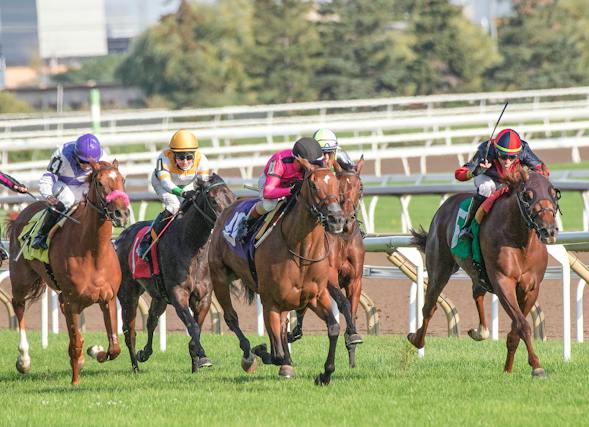
 

At the heart of this dominance lies a unique ecosystem that blends family, world-class facilities and one of the most powerful ownership groups in the sport. The alliance between O’Brien and Coolmore Stud has shaped the trajectory of top-tier Flat racing for more than two decades and ultimately transformed the global breeding landscape.

The Ballydoyle Blueprint in 2025

Ballydoyle, nestled in County Tipperary, is the epicentre of a racing empire. Under O’Brien’s stewardship, it is a finely tuned operation in which every detail – from feed composition to gallop metrics – is monitored and analysed. Horses are not simply trained to race; they are developed with data-led regimes designed to maximise potential.


O’Brien’s philosophy continues to emphasise preparation, control and marginal gains. What might appear small on paper – a slight change in gallop gradient, or a tweak to rest days – can translate into a measurable advantage on race day. That approach has produced a stream of champions: this year alone, Precise’s victory in the Fillies’ Mile brought his total Group One winners in 2025 to 22, putting him close to his own record in a calendar year.


At home and abroad, O’Brien’s consistency holds up. In the 2025 Goodwood Cup, his trained runners secured the top two places, with Scandinavia winning convincingly ahead of Illinois. Such dominance across staying contests underlines that his methods apply across distances and classes.

The Coolmore Connection

Central to O’Brien’s reach is the enduring alliance with Coolmore, led by John Magnier, Michael Tabor and Derrick Smith. Coolmore provides the breeding brilliance, O’Brien applies the training acumen, and together they complete a cycle of sustained excellence. The calibre of bloodstock supplied by Coolmore – often descending from stallions such as Galileo and his successful progeny – ensures that Ballydoyle regularly works with elite potential.


That alignment has shaped more than results: it has influenced how high-level racing is structured. The vertical integration of breeding, training and ownership is now a blueprint for ambitious stables worldwide. Many have tried to replicate the formula, but few match the scale or the consistency of O’Brien’s output.

A Family Tradition in Motion

O’Brien’s story is just as much a family story rather than his own individual one. His sons Joseph and Donnacha have established themselves as trainers in their own right. Joseph, once a champion jockey for his father, now commands his own following. Donnacha runs a lean operation but has shown that the O’Brien ethos transcends scale. Rather than rivalry, the relationship among their yards is a generational continuum built on shared principles: work ethic, attention to detail and respect for the horse.


O’Brien’s wife, Anne-Marie, contributed to the foundation. Before Aidan assumed leadership of Ballydoyle in the 1990s, she had trained winners herself. That heritage underpins the yard’s culture – racing is not merely business, it is identity.

2025 Highlights & Tactical Pivots

2025 has offered several defining moments. One is Lambourn’s win in the Epsom Derby, securing for O’Brien his 11th Derby victory. The Derby winner brought both prestige and substantial prize money to the operation.


Another notable decision was supplementing Minnie Hauk for the Prix de l’Arc de Triomphe at a cost of €120,000, a bold move reflecting the confidence in her form. She entered the race as one of the favourites according to sportsbooks providing up-to-date horse racing odds, and her presence reinforced O’Brien’s willingness to play hardball in elite contests. Unfortunately, she was just pipped to victory by Daryz.


In the Irish Derby, his track record remains unassailable, too. This year, the winner’s purse stood at €725,000, richly rewarding success in one of the sport’s great classics, which Lambourn, who was pushed hard by Ballydoyle stablemate Serious Contender, secured.


There have also been challenges among the plentiful successes. Camille Pissarro, an exciting prospect, was forced into retirement in 2025 following a leg injury. This served as a reminder that even the best operations must handle setbacks.

Sustained Excellence

Perhaps the defining feature of O’Brien’s greatness is longevity. Success in horse racing is inherently volatile; injuries, ground conditions and fickle form cycles can undo formidable plans.


Yet O’Brien has remained at or near the top for decades. For example, over the past five years, he has amassed over £48 million in prize money across Britain and Ireland, while having an estimated net worth of £34 million.


He always continues to adapt as well. Whether it is integrating performance analytics, tweaking training protocols or adjusting schedules to meet welfare demands, O’Brien ensures Ballydoyle evolves with the sport.

A Lasting Legacy

As the next generation of O’Briens forge their own paths, Aidan’s influence will persist. He has produced not only champions on the track but also inspired a wave of horse trainers who regard his methods as the gold standard.


In an industry that thrives on tradition, O’Brien has balanced continuity with innovation. Ballydoyle’s gates may lie in the fields of Tipperary, but its reach spans continents. Through precision, patience and partnership, Aidan O’Brien has not just dominated modern Flat racing – he continues to define it in 2025 and beyond.

Melbourne Cup 2025: UK Trainer sets his sights on Flemington Showpiece

Trainer Brian Ellison’s dream of winning the Melbourne Cup is still alive after his Onesmoothoperator booked his place in the big race on Friday.

The seven-year-old was ruled out of the defence of his Group 3 Geelong Cup on Wednesday after the inclement weather conditions forced the race to be postponed.

Connections decided to reroute the horse to the Moonee Valley Gold Cup in Melbourne and the move paid dividends as he claimed an impressive victory.

Settled towards the rear of the field by jockey Mark Zahra, the seven-year-old gelding sliced through the field in the home straight on his way to an eye-catching success.

Onesmoothoperator will now bid to win the most of famous of all the Group One races in Australia and Ellison thinks he could run extremely well.

“I thought we had a bit to do at one stage, but when he pulled him out, he picked up well,” he said.

“I know he’s got a great turn of foot. You just can’t ride him handy – you have to ride him for luck. He gave him a great ride.

“We needed a gallop on, and there was plenty of gallop on. I thought ‘are we in trouble here’ but when he got him rolling. He’ll improve for the run as well.”

“I just want ten days with no dramas like we did last year, like we’ve had before, and he’ll run well at Flemington. I’m not sure he’s going to win it because it’s a really hot race, but he won’t disgrace himself.

The United Kingdom-based trainer has booked Australian jockey Harry Coffey to ride Onesmoothoperator in the Melbourne Cup, with Zahra already committed to be aboard Al Riffa.

Onesmoothoperator finished 12th in the Melbourne Cup last year, but Zahra thinks he is capable of winning the race given the manner of his victory at Moonee Valley.

“He ran very well in it last year I think off a wide barrier,” Zahra said. “He’s definitely not without hope on 52kg. He settles well and he’ll run the trip, so he’s definitely got a chance.”

Zahra has an excellent recent record in the Melbourne Cup having ridden Gold Trip (2022) and Without A Fight (2023) to victory at Flemington.

He has an excellent chance of claiming his third win in the race aboard Al Riffa, who was an impressive winner of the Irish St Leger at The Curragh on his most recent start.

That race was the first time the horse had carried the colours of Australian Bloodstock and they have opted not to use his regular jockey Dylan Browne McMonagle.

Al Riffa is rated as a 5.00 shot to win ‘the race that stops the nation’ on the sportsbooks listed on the AustralianBettingSites comparison platform. Australian Bloodstock’s Jamie Lovett believes that Zahra improves their chances of success.

“In my view and a few others, Zahra is probably the best two-mile rider, the best staying rider we’ve got,” Zahra said. “Obviously a lot of the connections have got a good relationship with him, so it just made sense.

“That said, I feel sorry for the kid [Browne McMonagle]. I mean, he’s ridden him very well. He’s always been on the horse in Ireland, so it wasn’t easy to make the decision, but I think history shows that the local guys tend to have a better strike rate.

“I think the biggest thing is knowing the horses to follow and the jockeys to follow. If you don’t know the form and the local riders, it’s a long two miles around Flemington and if you get it wrong, it can cost you a Melbourne Cup.

“It’s just important to have the guys that know the track inside out and it’s a very unique race.”

Melbourne Cup 2025 – Latest Betting

  • Al Riffa – 5.00
  • Half Yours – 7.00
  • Valiant King – 8.00
  • Presage Nocturne – 11.00
  • Meydaan – 15.00
  • Buckaroo – 17.00
  • Furthur – 17.00
  • River Of Stars – 17.00
  • Absurde – 21.00
  • Onesmoothoperator – 21.00
  • Deakin – 26.00
  • Royal Supremacy – 26.00
  • Torranzino – 34.00
  • Vauban – 34.00
  • Birdman – 34.00
  • Goodie Two Shoes – 34.00
  • Gilded Water – 34.00
  • Middle Earth – 34.00
  • Chevalier Rose – 41.00
  • Flatten The Curve – 41.00
  • Bar – 51.00

US vs. UK Horse Racing: Key Differences and Betting Opportunities

Horse racing might look like the same sport on both sides of the Atlantic, but the moment the gates open, the differences become obvious. In the United Kingdom, it’s a test of endurance, strategy, and handling unpredictable turf. In the United States, it’s all about speed, precision, and tight track turns.

These contrasting setups shape how the sport is played and how bets are made. Each system has its rhythm and for bettors, knowing those rhythms is where profit begins. Let’s look at what sets them apart and how those details open new angles for smart wagering.

Track Surfaces and Racing Styles

One of the biggest contrasts lies in the ground itself. In the US, racing is far more standardised. Most tracks are dirt or synthetic ovals with consistent surfaces and shorter straights. Pace and early position dominate because speed sets the tone from the break. That’s why data-driven bettors track split times and post positions, while UK punters rely more on course shape, ground reports, and jockey judgment.

In the UK, most races are run on turf across natural, undulating courses that test balance and stamina. For those exploring horse betting online, live odds and market updates respond quickly to going changes, non-runner news, and track quirks. No two courses are identical, with left- and right-hand turns, uneven gradients, and weather-driven surfaces that shift through the day. That unpredictability means form study needs more than a glance at past results. It demands knowing how each runner handles specific conditions and course profiles.

Race Formats and Distances

British racing thrives on variety. It offers flat racing and National Hunt (jump) racing, each with distinct strategies and seasonal rhythms. Flat races can range from sharp five-furlong sprints to stamina-draining two-mile contests, while jumps test endurance, technique, and nerve. The same horse might face drastically different challenges week to week, which keeps form fluid and betting lines dynamic. Knowing how trainers campaign their horses across classes and distances is crucial in spotting overlays in the market.

In contrast, American racing heavily favours short to middle-distance events, typically between six furlongs and a mile and an eighth. The limited range creates a narrower form spectrum, making raw speed and positional bias more predictive.

Many bettors build models around pace projections and sectional timing rather than course adaptability. However, that narrower spread also means the few long-distance races, like those on turf or in graded stakes, often offer softer odds when stamina types cross over from Europe. Recognising those mismatch moments can be a profitable angle for experienced punters.

Betting Structure and Market Depth

The two countries also differ sharply in how money flows through their betting systems. In the UK, fixed-odds betting dominates. Punters lock in prices with bookmakers before the race starts, giving them control over timing and perceived value. If odds shorten after placing a bet, the early backer benefits. This encourages tactical plays like spotting value drifts or backing early movers before the market reacts. Exchange betting has also added a peer-to-peer dimension, where punters can back and lay selections directly against each other.

Across the Atlantic, pari-mutuel wagering rules the scene. All bets of the same type go into a shared pool, and payouts are determined after the race based on how much money sits in each outcome. There’s no fixed price, just a moving target shaped by the betting public.

For those skilled in pattern recognition, watching how pools evolve close to post time reveals crowd sentiment and mispriced entries. Sharp bettors use that volatility to their advantage, backing overlooked contenders in the final minutes before the window closes. Understanding those liquidity swings is essential for consistent returns in US racing.

Jockey Tactics and Training Approaches

The way horses are ridden and trained reflects each nation’s conditions. In the UK, races often develop slowly before building into sustained, tactical finishes. Jockeys must judge pace across longer stretches, knowing when to hold and when to push. Training emphasises stamina, adaptability, and recovery, since horses frequently compete at varying distances and courses throughout a season. That’s why trainer patterns, such as targeting specific meets or track types, often signal intent before markets adjust.

In the US, the approach leans heavily on explosive starts and steady cruising speeds. Trainers condition horses for quick acceleration and front-running efficiency, and jockeys ride to preserve position more than to craft late surges. Split-second decisions at the gate can decide everything. Bettors studying trip notes and post-position biases gain an edge because the early break is such a decisive factor. Spotting a horse with both tactical speed and a favourable draw can reveal where the true overlay lies, even in short fields.

Seeing the Game Beyond Borders

Viewed side by side, American and British racing mirror two schools of thought. One relies on control, tempo, and fixed systems. The other thrives on adjustment, endurance, and variation. The same difference applies to how money moves in their markets. Each demands a separate betting discipline, but the real advantage belongs to those who bridge them. Seeing how odds shift, how conditions alter pace, and how trainers adapt gives bettors the kind of clarity that keeps long-term profit realistic.

Horse racing odds trends for top UK trainers in 2025 season

In British racing, the silverware often tells you as much about the yards as the horses. Another season, another reshuffle. Bookmakers lean toward Willie Mullins after yet more festival plunder, while a determined British chase pack tries to chip away at the gap.

Some names never seem to leave the picture, yet the prices do not sit still for long. As we edge into the closing stretch, attention tilts toward Grand National week and the Sandown deciders. Margins look tighter than last year, arguably because live data, sharper timing, and smarter syndicate money keep nudging the markets. With the clock ticking, the question is less poetic and more practical: who actually lands the trainer title, or at least forces a late rethink in the books?

Mullins still the yardstick

The leaderboard, if we are honest, has rarely looked this clean. Willie Mullins again stands at the front of the market for the UK’s biggest training honours. A quote around 1/6 to finish top tells its own story about his trophy haul and, perhaps more importantly, the market’s faith in how he finishes a season.

For long spells in 2025 he has been behind Dan Skelton on prize money by roughly fifty grand, which sounds close until you listen to the compilers. They point to relentlessness, to festival strike rates, to reserves of class targeted at Aintree and Sandown. These factors combine to skew all horse racing odds in his direction, pushing his UK-based rivals further back on the boards. Mullins looks, to many eyes, odds-on to lock up both the Irish and British titles, and that shift in perception is telling: he is no longer framed as merely Ireland’s juggernaut but as the main force on either side of the Irish Sea.

The pursuers will not go quietly

Dan Skelton has been the chief threat. He held a slender money lead at stages this spring and keeps landing the right handicaps, the right festival pots. Even so, 6/1 about the Trainers’ Championship feels cautious from the layers, who are clearly unsure whether that advantage holds when the fixtures pile up and the big weekends bite.

There is respect for Skelton’s sting on the big days, but stamina across April can decide these things. Meanwhile, Nicky Henderson, priced at 11/2 for Cheltenham’s leading trainer this year, trails both Mullins and Skelton on the boards and in the bank. Henderson still carries Britain best known badge, yet in recent seasons he has lacked the volume of headline wins to flip the script.

Odds shaped by data, not gut feel

It is difficult to escape the trend. Prices now react to live cards, sectional figures, and where the liabilities sit. The screen flickers, a horse bolts up, and the number next to a trainer’s name shortens before you have found a replay.

That volatility cuts both ways. Gordon Elliot, despite profile and plenty of prize money, has been edged out of several late-season markets as compilers frame the title as essentially Mullins versus Skelton. One big Aintree or Sandown result could flip it, admittedly, but for the moment the data keeps dragging the same two names into focus.

Others drifting in the betting

Paul Nicholls and other familiar UK operators have slipped from the sharp end this time. It surprises some punters, given the history. The market, though, seems fairly blunt about it. Mullins and Skelton command most of the attention, leaving the rest priced as outside hopes rather than likely disrupters.

That looks tied to recent festival output. Odds setters reward up-to-date, relevant form and do not hesitate to let others drift unless a shock lands late. Value seekers may still find a price they like, but from this vantage point a meaningful surge from beyond the leading pair feels a hard ask.

A final word on staking. This is entertainment, or it should be. Set limits, keep stakes sensible, and step away if it stops being fun. Help is available from national advice services and helplines if you need it. Look after the bankroll and, frankly, yourself.