
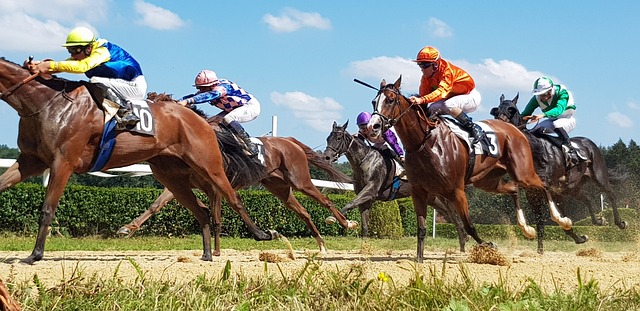
 Horse racing is often described as a contest between the fastest horses, yet the rider on top plays a far greater role than many casual fans realise. At speeds that can reach around 40 miles per hour, jockeys must make rapid decisions while maintaining balance and control over a powerful animal weighing several hundred kilograms. A race can change in the space of seconds, with the small details like positioning and timing massively shaping the outcomes of a race. Trainers and analysts have long stated that tactical riding could massively transform the likelihood of a certain horse winning. Looking at jockey strategy and how it works can help to explain why some jockeys are more successful and consistent than others.
Why Jockey Strategy Matters
Winning a horse race is rarely just about having the fastest horse in the field. Much of it comes down to the decisions made by the jockey during the race itself, with riders constantly watching what is happening around them, keeping an eye on rival horses, and adjusting their approach as the race unfolds. They are required to carefully judge their pace as well as react quickly once positions change, making small movements that could impact how the horse responds and performs at certain times during the course of the race. Choices like these are ones that jockeys must get correct, especially in closely packed, high-speed races where every movement could make a difference.
For those who follow the sport more closely, including discussions around Irish national betting, these tactical elements often become part of the wider conversation, although the outcome of any race is still shaped by a combination of preparation, performance, and decision-making on the day.
Role of the Jockey Before the Race
Much of the strategy in horse racing is planned before the starting stalls even open. Jockeys usually discuss tactics with trainers who know the horse’s strengths, preferred running style, and stamina. A horse that finishes strongly may be held towards the back early on, while a natural front runner might attempt to set the pace from the start. Riders also study the likely speed of other runners in the race to judge how the early stages may unfold. Planning in this way allows jockeys to position their horse where they can perform at their best once the race begins.
Securing an Early Position
The opening seconds of a race can shape everything that follows. Once stalls open, jockeys try to secure a strong position that can give the horses the best chance of performing at their best, separating them from the rest of the crowd. Being boxed in means that a horse might perform at a slower pace or a change of stride, resulting in wasted energy and even a disruption of the horse’s rhythm. For this reason, some riders aim to settle just behind the leaders where they have the best chance to move either inside or outside once the race begins to tighten. A well-judged early position often allows the horse to travel comfortably while waiting for an opportunity later on.
Managing Pace and Conserving Energy
Pace management is one of the most important parts of race riding. If a jockey allows the horse to run too quickly early in the race, it may become tired before the finishing stages; however, travelling too slowly can leave too much ground to make up. Skilled riders develop a strong sense of timing and rhythm so they can judge the speed of the race without relying on clocks or displays, with the goal being to keep the horse relaxed while conserving enough energy to respond when the race begins to intensify in the closing stages.
Navigating Traffic During a Race
Horse races typically involve a large group of runners that move towards each other at very high speeds, which puts people at risk of being blocked by other horses. Jockeys must therefore become sharp and aware of their surroundings with quick reaction times, alert throughout the race. Small movements of the reins or even full body shifts to move weight are just a few ways that can help guide the horse into a clear running space. When riders are unable to escape the crowd, momentum can be lost, and the horse may struggle to regain position. Avoiding traffic is a key skill for jockeys, especially when coming up against strong competition, where these opportunities may come rarely and very quickly, disappearing in a moment.
Timing the Final Push
The final stretch of a race often reveals the quality of the ride. Jockeys must judge exactly when to ask the horse for its maximum effort, which usually involves urging the horse forward with stronger rein and leg signals. If this effort begins too early, the horse may weaken close to the finish. If it comes too late, the leaders may already be out of reach. Some famous riders have built their reputations on mastering this moment. The British jockey Harry Wragg, for example, became known for holding his mounts back before producing a late challenge that surprised his rivals.